For CPAs
Your gambling clients changed. Their records didn't.
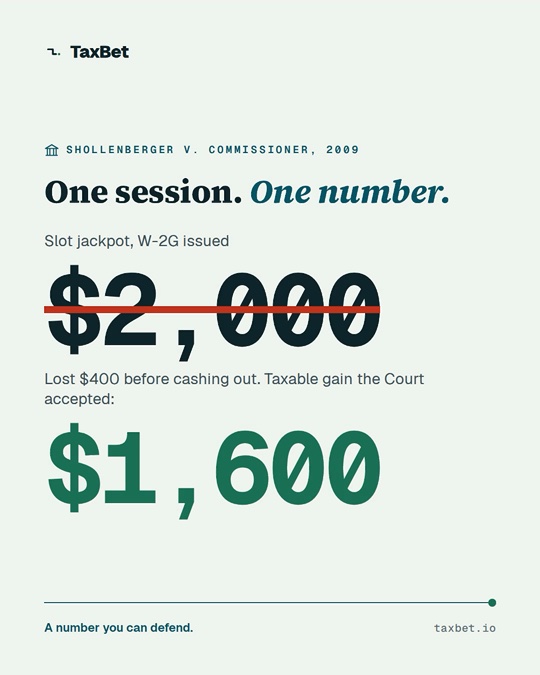
Gambling clients used to bring a shoebox or a casino win/loss statement. Now they bring five apps, thousands of transactions, and a stack of W-2Gs that overstate their income — and the win/loss statement, the traditional baseline, is exactly the weak-evidence document the session method exists to replace. Even preparers who've handled gambling income for years have never had tooling for online-era volume, because until now the volume didn't exist.
The same year of client data now demands three separate computations: the federal session method (Chief Counsel Advice AM2008-011; Notice 2015-21), the new 90% loss cap layered on top — a rule no preparer has filed under, because TY2026 is the first year it applies — and state math that follows neither: Pennsylvania's cost-of-wagers netting on Schedule T, New Jersey's netting, Michigan's deduction rules. Reconstructing that by hand from raw exports is hours of low-leverage work — or a client you turn away.
Background: the 90% cap · how PA computes it · the CP2000 wave
Your client runs the upload — their files are parsed and computed in their browser, and their report and data file live on their device. You receive numbers you can audit, not numbers you must trust.
TaxBet computes and documents; it does not file, sign, advise, or represent. Filing positions are yours. The workpaper shows its methodology and citations precisely so you can disagree with it.
Your client hands you the data file TaxBet gave them at purchase (TaxBet-Data-year.json) — or their raw operator exports. Drop it into the CPA portal and the workpaper renders on your machine: a client roster, review status, your own sign-off record, and a downloadable workpaper file. Everything is parsed and computed in your browser and stays on your device; nothing is uploaded anywhere.
We match notice-holders and filers with professionals who know the session method — in their state, at their preferred rates, paid directly to them.