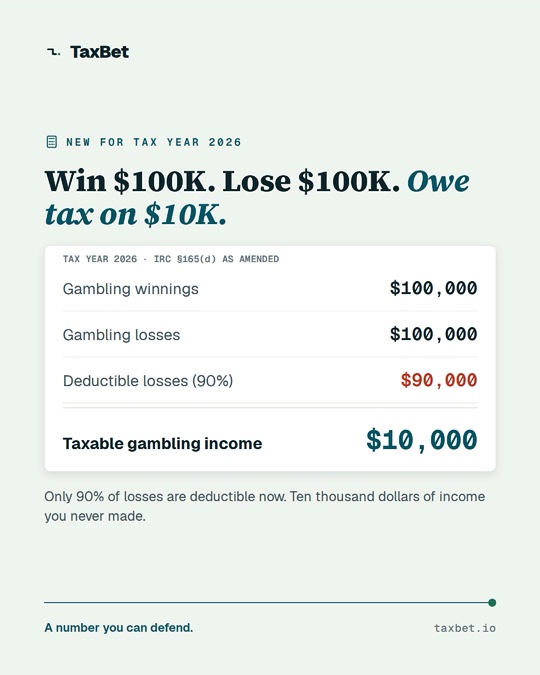
The worked example
Meet Alex — a year that was genuinely down:
The 90%-cap worksheet · tax year 2026
Winning sessions$12,400
Losing sessions$13,000
Real result — actually down−$600
Deduction cap: 90% of losses$11,700
Losses that simply vanish−$1,300
Taxable gambling income$700
A losing year that owes roughly $154 in federal tax at an assumed 22% bracket — an estimate for illustration; your rate depends on your full return. The dataset behind this example is the same one used everywhere it appears, so the math always ties out.
Why your winnings number is now the whole game
Under the cap, every dollar of overstated winnings is a dollar taxed with only 90-cent offsets. Filing from gross W-2G totals was expensive before; now it compounds. The session method computes the smallest defensible winnings figure — and that figure is the only lever you control.
Nobody has ever filed under this rule
Tax year 2026 returns — filed in spring 2027 — are the first ever computed under the cap. Your CPA hasn't seen it in practice either, because nobody has. Bring them the worksheet, not a shoebox.
Related: got a CP2000 about gambling? · 2026 changes FAQ · how to get your transaction history